Researcher Story
Modeling Catalysts for Sustainable Energy
Dr. Ali Estejab’s research group in Tennessee Tech’s Department of Chemical Engineering uses computational and multiscale modeling to investigate challenges in energy, catalysis, separation processes, and new materials. By studying chemical systems across scales—from macroscopic processes to atomic and molecular interactions—the group seeks to understand how catalysts, materials, solvents, and reaction environments influence chemical processes.
These computational approaches can help guide the development of more efficient catalysts and separation technologies while reducing the time and resources required to investigate complex systems experimentally.
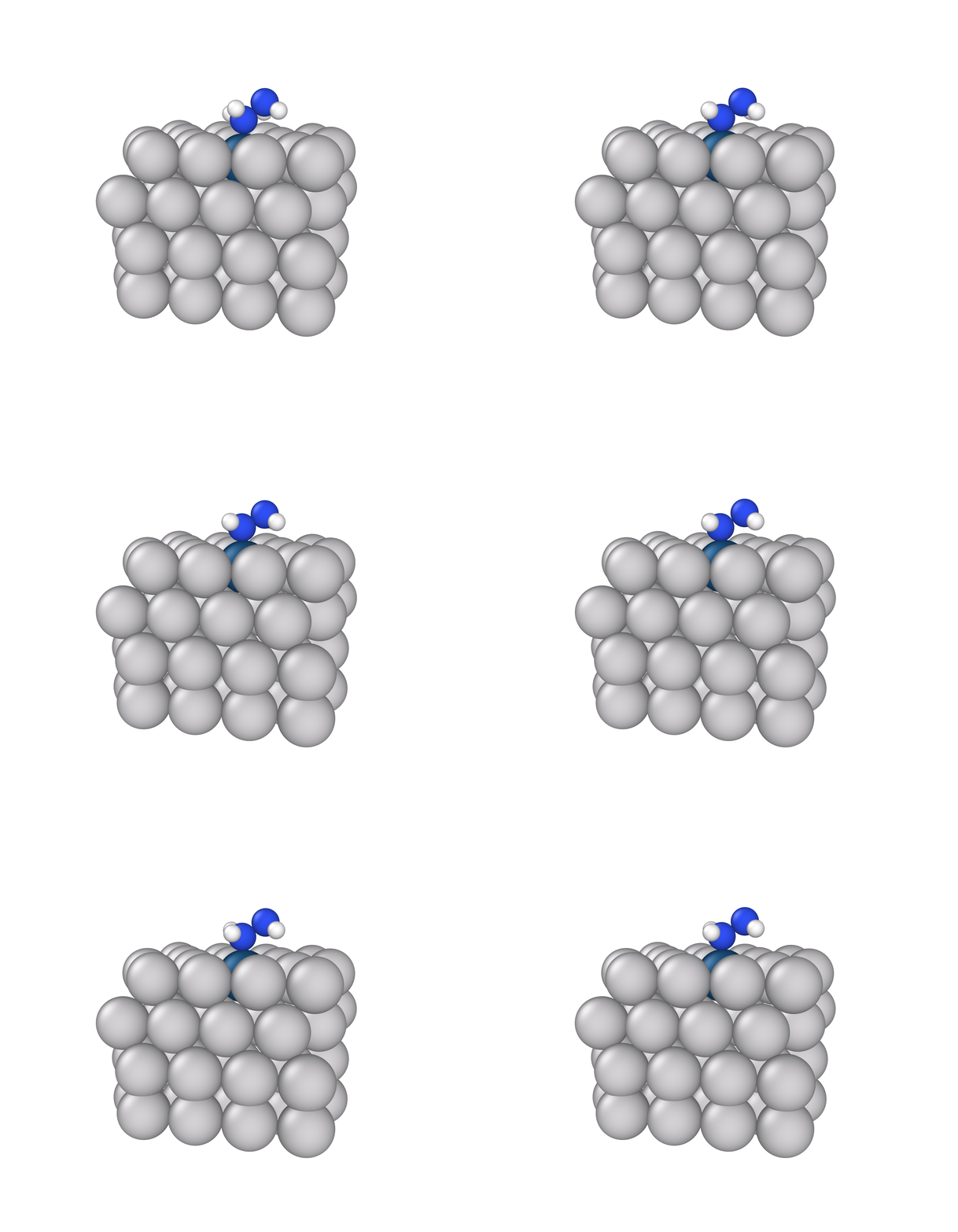
One area of the group’s current research focuses on sustainable hydrogen production and ammonia-based energy systems. Using quantum-mechanical calculations, including density functional theory (DFT) with the Vienna Ab Initio Simulation Package (VASP), the researchers investigate interactions between ammonia-derived species and catalytic surfaces such as platinum-iridium (Pt-Ir).
High-performance computing enables the group to perform geometry optimizations and calculate properties such as adsorption energies, providing insight into the behavior and stability of molecules on catalyst surfaces. Computational visualization tools are then used to analyze and communicate these atomic-scale interactions. Ultimately, this work contributes to the broader goal of developing more efficient catalytic processes for sustainable energy production and environmental applications.
How RCD Supports the Research
Research Computing & Data is an essential resource for the group’s computational research. Its molecular simulations require substantial computing capacity, and access to Tennessee Tech’s high-performance computing infrastructure enables calculations that would be impractical on standard personal computers.
Beyond providing computational resources, the RCD team assists the research group with HPC troubleshooting, job submission, software and workflow questions, and strategies for improving the efficiency and reliability of its computational work.
Research Team
Dr. Ali Estejab and Yulieth Mercado Sosa
Department of Chemical Engineering
Estejab Research Group
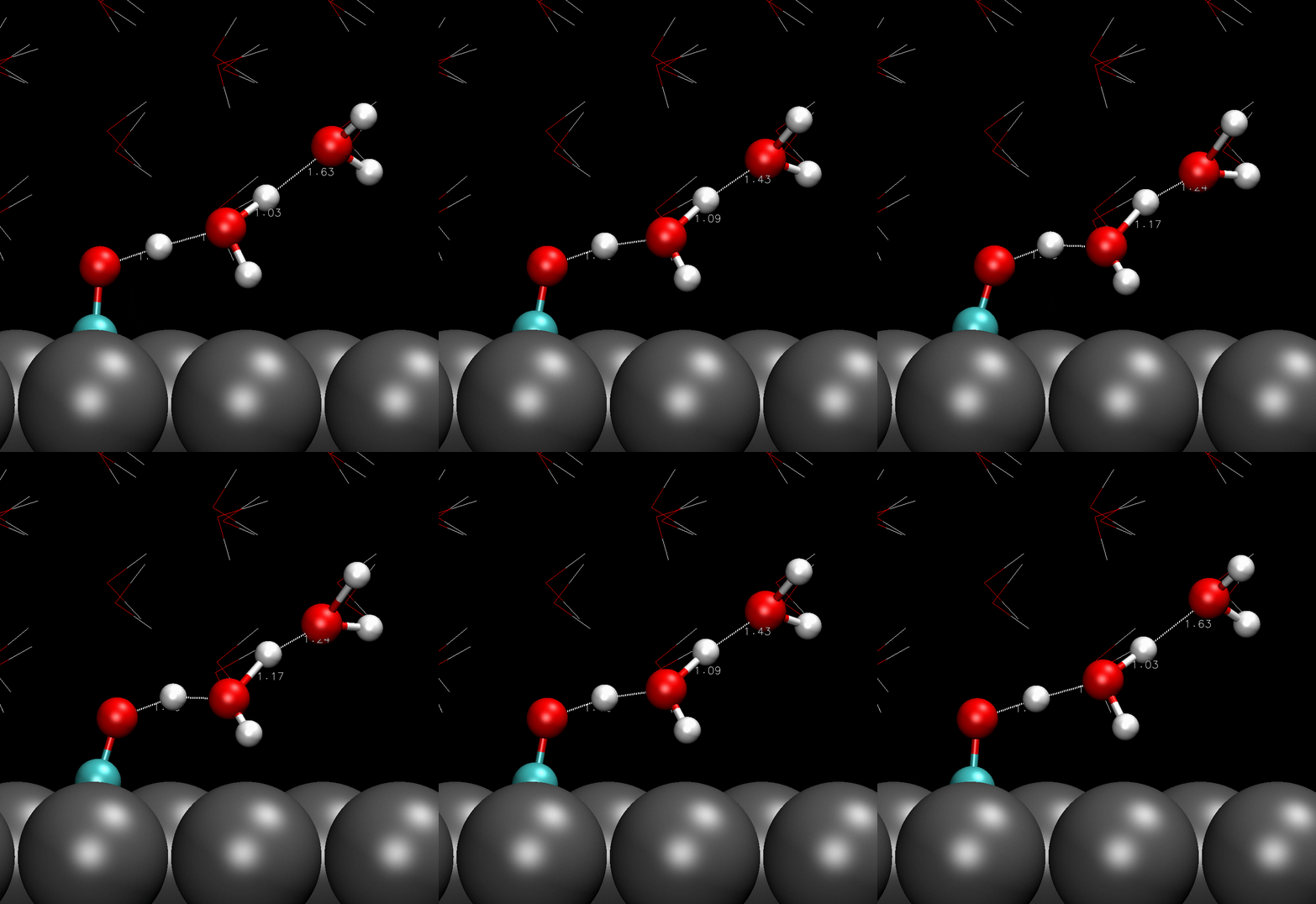
A COH species adsorbed on a catalyst surface and hydrogen-bonded to adjacent water molecules. The labeled distances help researchers examine interactions within the simulated system.