Researcher Story
Tracking the Effects of Invasive Aquatic Plants with eDNA
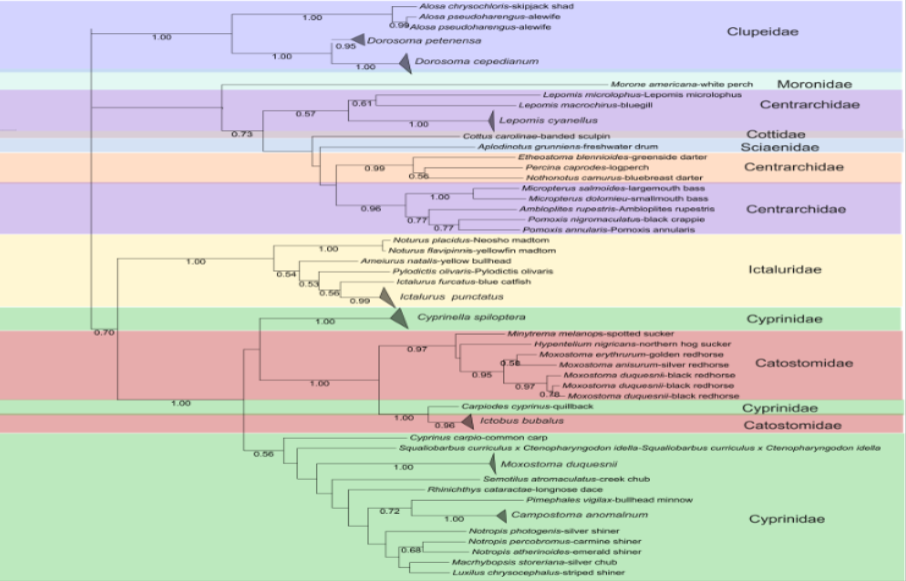
Invasive aquatic plants can alter habitat conditions and affect native communities throughout freshwater ecosystems. John-Kaarli Rentof’s research in Tennessee Tech’s Department of Biology uses environmental DNA, or eDNA, metabarcoding to investigate how these plants influence biodiversity in Tennessee River reservoirs.
By sequencing DNA collected from water samples, the project examines fish, macroinvertebrate, and plant communities across reservoirs with varying levels of aquatic plant invasion. The results will help researchers better understand how invasive vegetation changes native ecosystems and may provide information that supports future reservoir management and conservation efforts.
How RCD Supports the Research
Research Computing & Data worked with the research team to redesign and optimize its QIIME 2 and BLAST workflows. The improved workflow processes all primer sets within a single high-performance computing job instead of requiring a separate job for each primer set. This has reduced analysis time and simplified the project’s bioinformatics pipeline.
RCD also established a shared NCBI BLAST database on Tennessee Tech’s high-performance computing system. Researchers can now use a centrally maintained database instead of downloading and maintaining separate local copies, making large-scale eDNA analyses more efficient and accessible.
Research Team
John-Kaarli Rentof
Department of Biology
Molecular Ecology Lab
Dr. Carla Hurt
Department of Biology
Tennessee Tech University